
Common Myths About Concrete Polishing Explained

You’ve probably heard a few things about concrete polishing that gave you pause. Maybe someone told you it’s only for warehouses or that it’ll turn your floor into a slip-and-slide. These kinds of myths end up steering people away from a flooring option that is perfectly functional and beautiful. Let’s take a look at some common myths about concrete polishing and explain the truth so you can make a smart, informed decision for your home or business.

Myth 1: Polished Concrete Is Only for Industrial Spaces
This one’s probably the most widespread misconception out there. Polished concrete got its reputation in factories and warehouses because those environments were early adopters, but the process works just as well in homes, retail stores, restaurants, offices, and everything in between.
The finish is fully customizable. You can choose your level of sheen, from a low matte that reads almost like natural stone to a high gloss that reflects light across an entire room. You can also explore decorative options like stains and aggregate exposure to create a look that fits a residential living room or a boutique storefront. In short, your space doesn’t have to look industrial just because the flooring material has industrial roots.
Myth 2: Polished Concrete Is Slippery
People hear “polished” and picture something like a sheet of ice. That’s not how it works. Concrete polishing uses a series of progressively finer diamond abrasives to refine the surface, and the result is a floor with a measured coefficient of friction that meets or exceeds standard flooring safety requirements. Polished concrete isn’t slippery at all, unless you’re wearing socks and getting a running start. Even so, if you need to upgrade traction in certain high-risk zones (like wet or high-traffic areas), then you can lay down rubber mats.
Myth 3: You Can’t Polish a Damaged Concrete Slab
Not every concrete slab is in perfect condition, but you don’t need perfect concrete to accomplish polishing. Contractors evaluate the slab’s condition before starting, and they can address minor surface imperfections during the preparation phase with fillers.
That said, there are limitations. Slabs with severe structural damage, active moisture intrusion, or extensive contamination from certain chemicals may require significant remediation before polishing is possible. But again, a qualified contractor will tell you exactly what’s possible during the assessment phase.
Myth 4: Polished Concrete Requires Constant Maintenance
This one’s almost the opposite of the truth. Polished concrete is one of the lowest-maintenance flooring options available. There’s no wax to reapply, no coating to reseal every year, and no grout lines to scrub. Day-to-day cleaning usually comes down to dust mopping and occasional damp mopping with a pH-neutral cleaner.
The densifiers and sealers used during the polishing process harden the surface and reduce concrete’s porosity, which makes it resistant to staining, abrasion, and moisture absorption. This fact is one of the biggest reasons industrial facilities were among the first to adopt polished concrete flooring, as floors in these facilities must endure a lot.
Myth 5: Polished Concrete Always Looks the Same
Walk into 10 different spaces with polished concrete floors, and you’ll see 10 different results. How polishing turns out depends on these variables:
the original slab composition
the aggregate exposure level you choose
the sheen level
any coloring added
You might be wondering what aggregate is. It’s the granular material that comprises most of cement’s body, and it can be fine or coarse, dark or relatively uniform in color. Aggregate usually settles as concrete dries, but when you polish concrete, you grind away the surface and expose suspended aggregate. So depending on what type of aggregate concrete has and how much gets revealed, along with sheen and color options, polished concrete floors can look vastly different.
Myth 6: Concrete Polishing Is Just Grinding
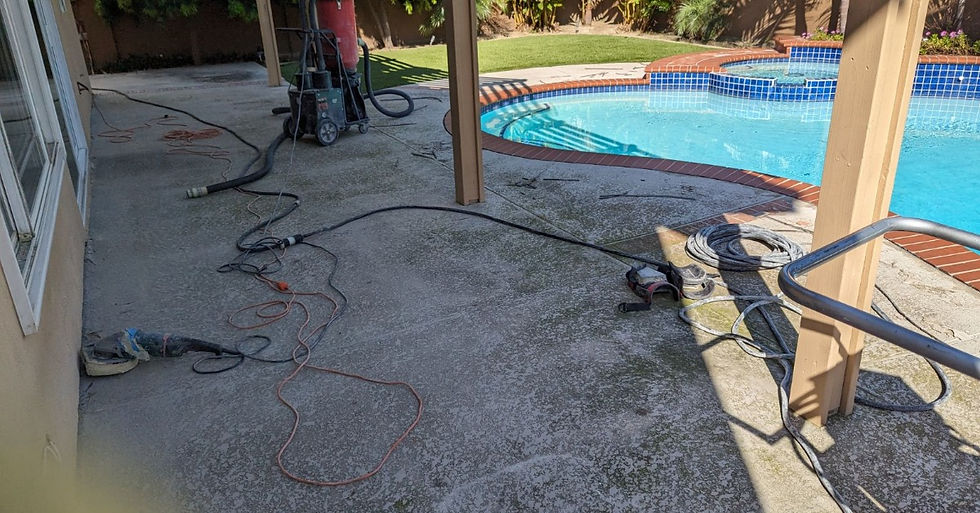
Grinding is one step in a multi-phase process, not the whole thing. The full process involves these three main steps:
mechanical grinding to prepare and level the surface
application of a chemical densifier that hardens the concrete from within
a sequence of progressively finer polishing passes to achieve the desired sheen
Depending on the project, additional steps may include surface patching, decorative staining, and the application of a protective guard or sealer.
Myth 7: Polished Concrete Is Cold and Hard on Feet
Though concrete is not the most comfortable flooring, it’s not as harsh as many people make it out to be. For one, concrete can be just as warm as it can be cold. If you keep your home heated or have the windows open on a sunny day, the floor will heat up nicely.
Secondly, you can always add rugs to improve how the floor feels under your feet. Rugs are far easier to manage than wall-to-wall carpet, and the concrete floor underneath will stay in great, low-maintenance condition for a long, long time.
Myth 8: The Process Takes Too Long
Project timelines vary based on slab size, condition, and finish complexity, but polished concrete is not an unusually slow process compared to other commercial flooring installations. A straightforward polish on a prepared slab can be completed in a matter of days.
Moreover, unlike tile or hardwood installations that require adhesives and curing times, polished concrete doesn’t need to sit and set once the final polish pass is done. The space is ready to use once the process is complete.
What This Means for Your Property
Now that we have explained the facts and cleared up the most common myths about concrete polishing, what do you think? This flooring solution is practical, aesthetically versatile, and cost-effective in the long term. Ultimately, polished concrete is excellent for flooring—it just depends on whether you like the look of it in your space.
If you’re considering concrete polishing in Los Angeles or any of the other counties Rescrete serves—including Orange, San Diego, Riverside, and Ventura—get in touch. We work with residential, commercial, and industrial property owners throughout Southern California. We also provide free consultations and estimates, and we’re happy to answer any questions you may have.


Comments